What does it take to create a historically accurate straw bonnet or hat?
I suspect each historical milliner and costumer will answer this question differently.
For me, creating a historically accurate straw bonnet or hat form comes down to three things:
~ An understanding of shape
~ Accurate (available) materials
~ Period techniques
Of course, I would like to include solid research as a foundation.
Shape
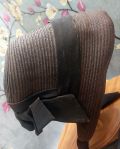
Each style of straw millinery throughout the nineteenth-century, be it hat or bonnet, has a particular shape. Often, this shape is an evolution from a previous shape into the next shape. A brim might rise or recede. Cheektabs may narrow or extend. A crown may lift or flatten. The change in shape creates a fluid transition from one style to another.
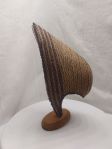
I find when working with straw plait by hand, the shifts in shape in one area of a bonnet or hat
to be directly connected to the changes in another. Each row of plait influences the next as it is influenced by the one before. Tension. Pressure. Pressure. All coaxing curve, height, or depth into place.
Because of this, I see the fluid transition from one shape into the next, one style into the next to be interconnected with the straw itself.
Materials
This, of course, brings us to materials. The core material of a straw bonnet or hat being straw. It is nearly impossible to get the amazing straw plaits used in the nineteenth century today. When taking into account their straw, width, thickness, fine plaiting, even the most common base plait simply does not exist. This is without even considering the fancier plaits available at the time.
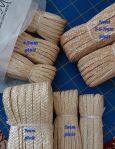
When looking at the straw plait currently available, variety still exists. I can tell you what is available today in 2026 is different than what was available in 2016. Both whole plait and split plait were in use in the 19th century, with split plait being more common. Today, whole plait is the norm as split plait needs to be worked by hand. Most straw plait is now made with a straw plaiting machine either in China or Italy. These machines use whole straws rather than split straws (literally a straw split into smaller, finer pieces). This means, in general, plait is thicker than split plait 200 years ago. Whole straw plait is also tougher to work with, meaning it has more body requiring more tension from the hands to manipulate. Even the narrowest 4mm whole plait has more body than its split plait counterpart.
The advantage of whole plait is its strength, durability, and longevity.Whole plait paired with full wiring and water soluble sizing can create a bonnet or hat that will last for a decade or more. It can be re-trimmed, reshaped, and repaired all while maintaining historical accuracy.
Period Techniques
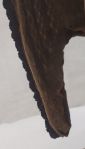
Prior to the introduction of the straw sewing machine, straw plait was sewn by hand. Stitches were short on the outside, long on the inside. Sewing a bonnet or hat by hand allowed time for shapes to be created through manipulating the straw plait. The hand control in sewing process created the piece’s shape while the millinery block guided the shape as a pattern would, then solidified the shape in the blocking/sizing process. I find this encouraged the changes in shape we see from the beginning of the century through the 1860s.
As the 1860s closed, the straw sewing machine was introduced to the process, beginning with binding. From this point on, the detail of shape shifts from being a partnership between hands and straw to reliance on the millinery block as mold.
For me, historical accuracy in straw millinery is a melding of knowledge of shape, materials, and technique. By understanding how nineteenth-century milliners worked with their materials rather than against them and the techniques they used, an understanding of the fashionable shapes naturally develops.
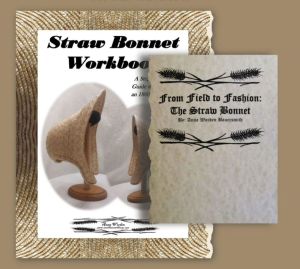
It is very important to me that people have the knowledge to make informed decisions about their millinery. Historically accurate bonnets & hats are expensive. I myself have never been in a financial position to purchase. This is why I had to learn to make my own. I would love to be able to gift everyone a free copy of my Straw Bonnet Workbook & From Field to Fashion. But, I can not afford to. Instead, I’ve decided to offer it half price this month. My hope is people will read it and make informed decisions about their purchases or try their hand at their own.





 If I Had My Own Blue Box:
Leave a comment