I am concerned about something I am seeing lately: Inaccurately constructed bonnets posted & promoted on social media.
I theorize this increase in inaccurately made items is due to an upsurge of new people reenacting following the lull the past few years. While new reenactors can be wonderful, they can also be vulnerable and taken advantage of as they try to develop their waredrobes in an accurate yet cost-effective manner.
I fear these inaccurate millinery pieces appeal because they are comparatively less expensive and are often pretty with an ubundance of trim, which are in themselves inaccurate. While these pieces may cost less initially, in the long run, they are more costly as they will need to be replaced.
How do you know a bonnet is inaccurately made?
There are two key parts of a bonnet that are quick to spot and eliminate a piece:
The Tip and the Cheektabs
First, the tip:
The tip is the back part of the crown that sits on the back of your head. For the 1840s through the first half of the 1860s, the tip is round, either a circle or an oval. The circular or oval tip is consistent in extant bonnets and millinery blocks:

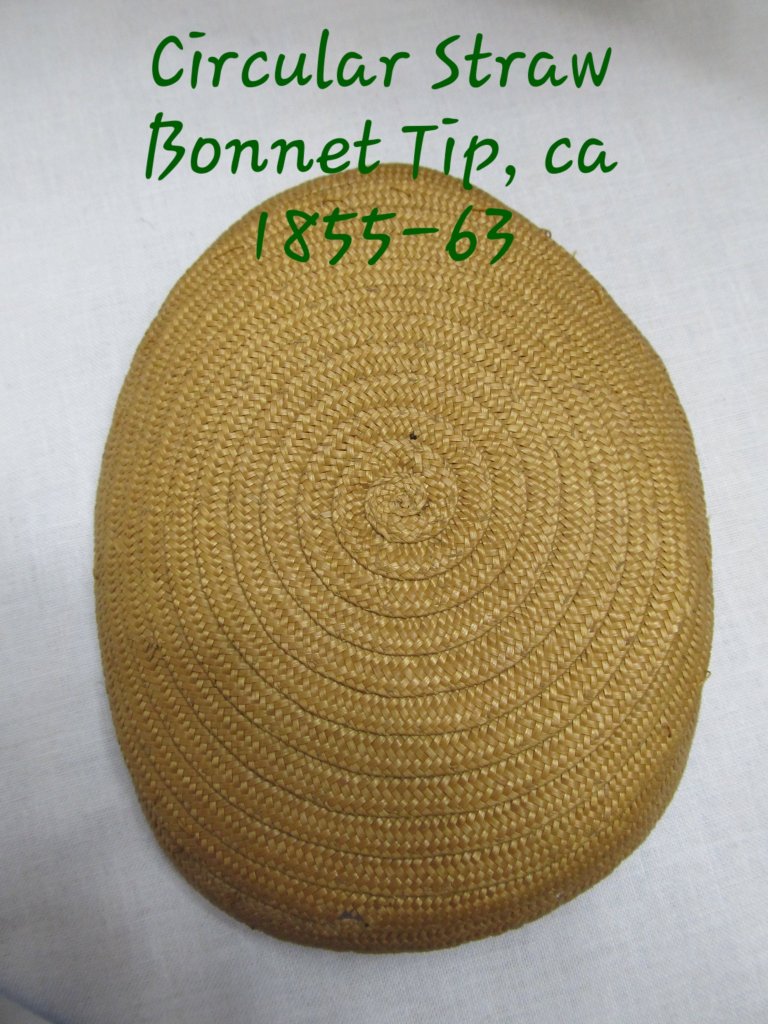


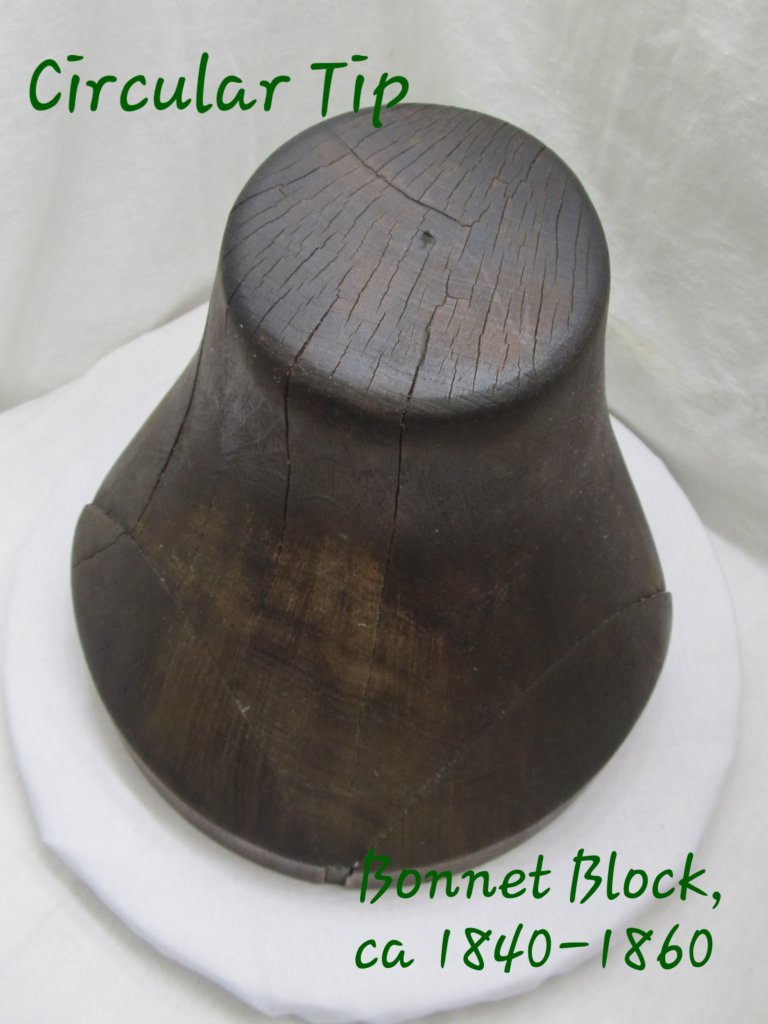

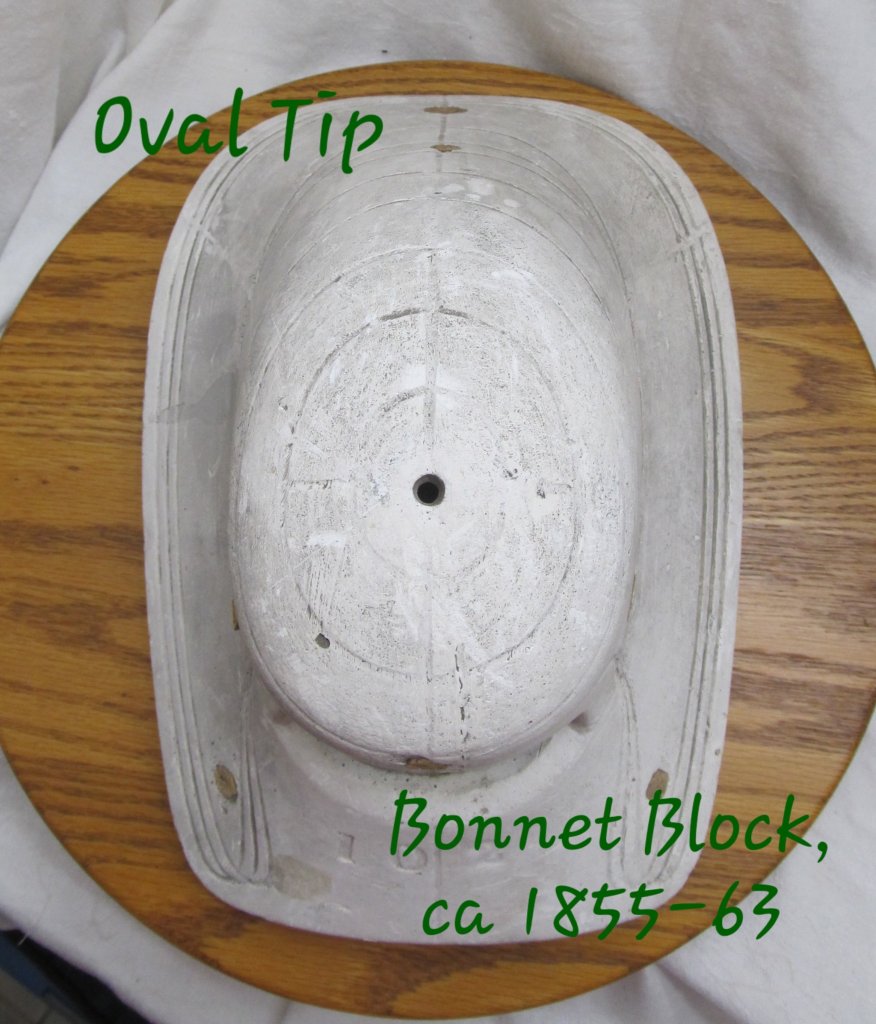
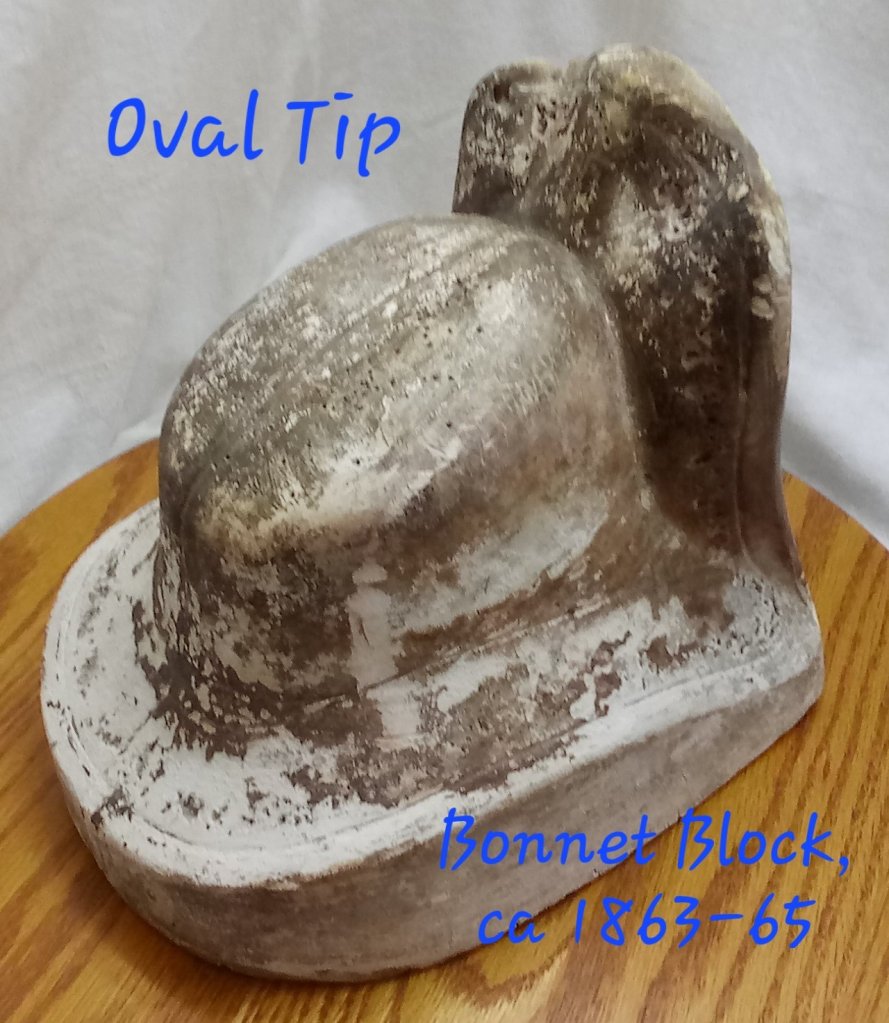
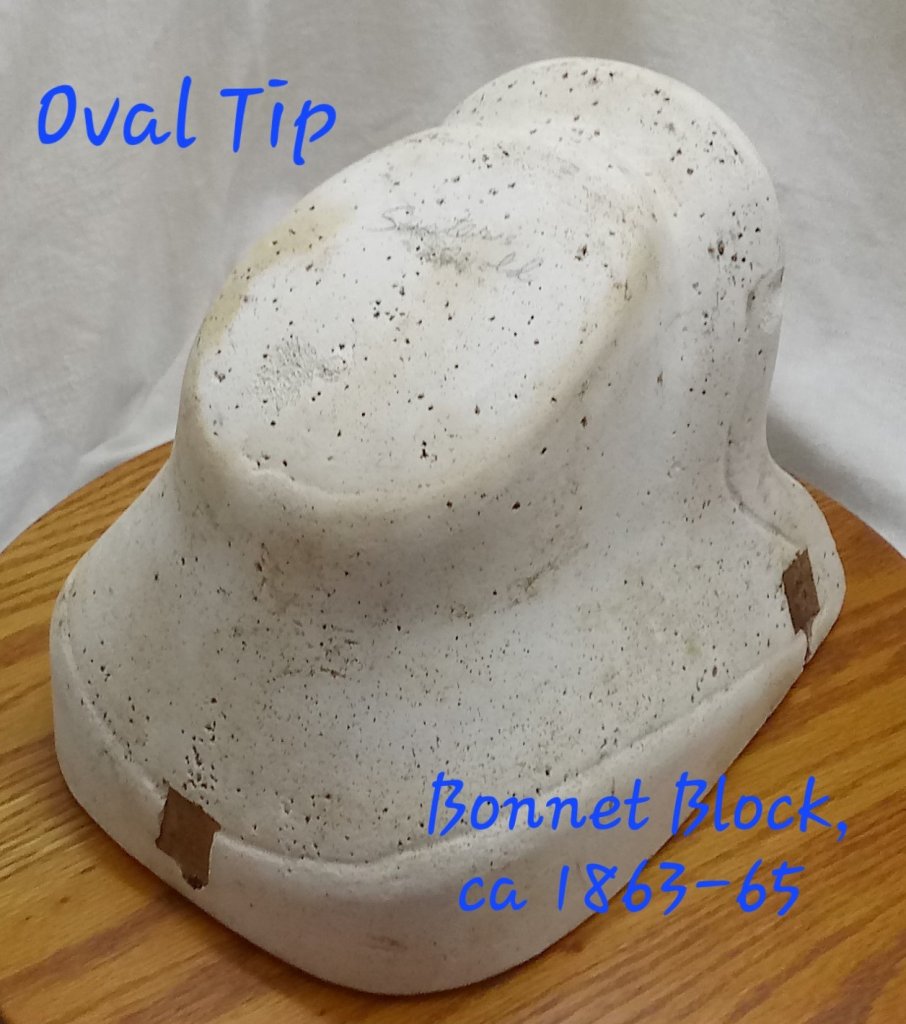
If a bonnet has a horseshoe shape tip or a semi-circle tip, eliminate it.
Next, the Cheektabs:
The cheektabs are the part of the bonnet on each side that extend down from the brim. As the 1840s progressed, these became elongated. They continued to thin or narrow in the early 1850s. By the mid 1850s, cheektabs were several inches long and narrow. This continued through the first half of the 1860s. Cheektabs took two primary shapes: either narrow and curvey with a twist or triangular.

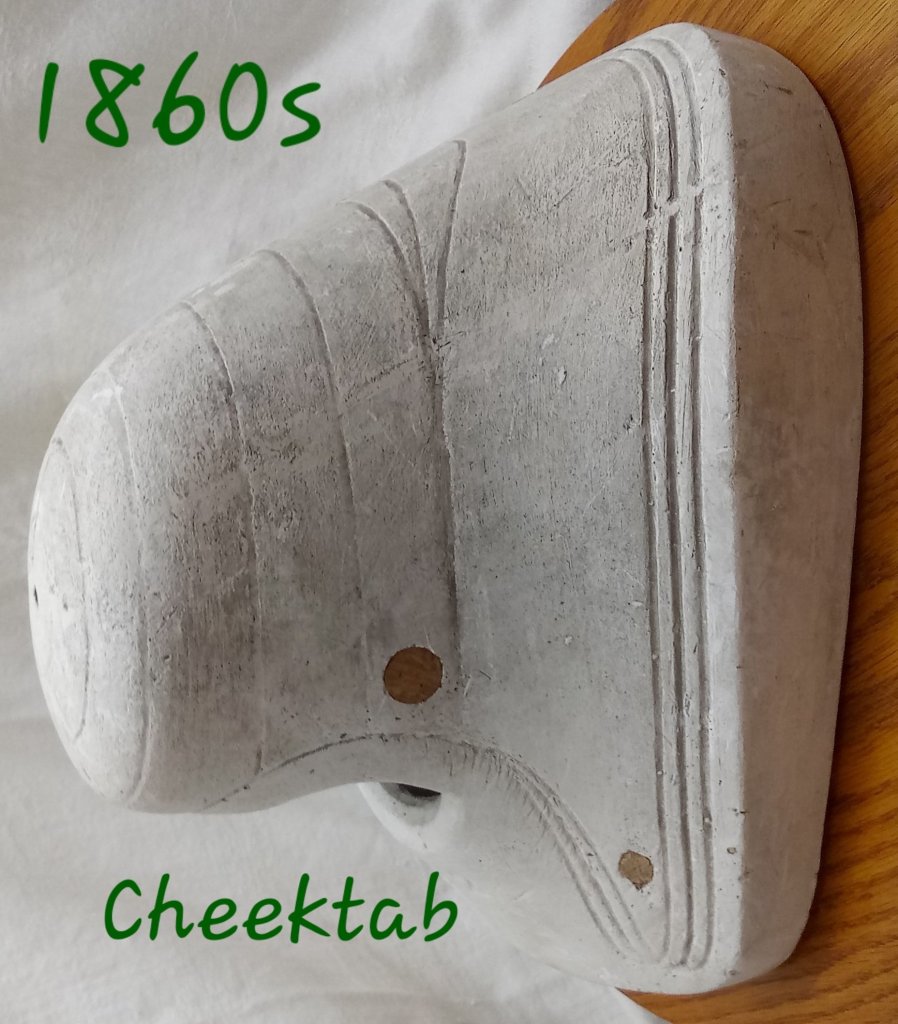
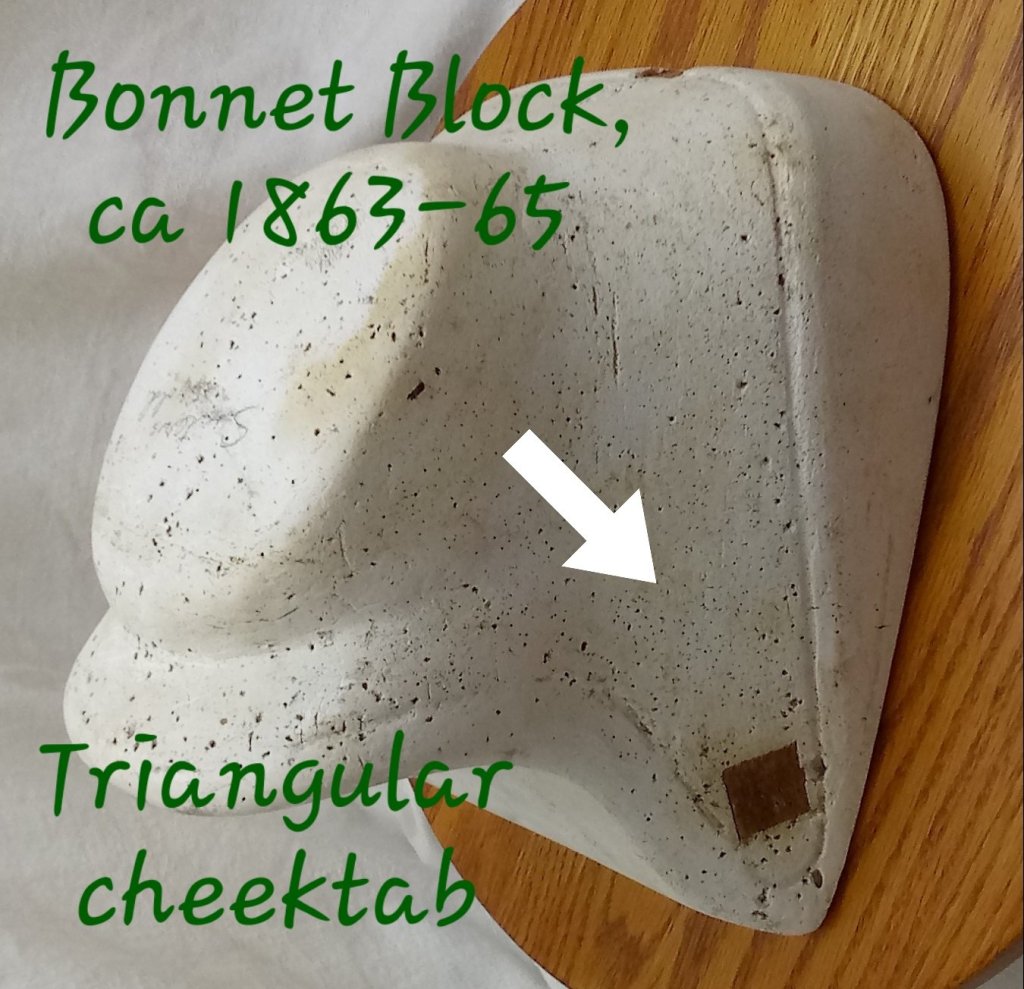
If a bonnet does not have cheektabs or has short, nubby tabs, eliminate it.
These two factors will hopefully help you quickly eliminate inaccurately made bonnets whether you see them online or in person.
I have one additional aspect to look out for as you shop. If you are looking at straw bonnets, please be aware of how some mass-produced bonnets are made.
More information on the Anatomy of a Bonnet:





 If I Had My Own Blue Box:
Leave a comment