Resources for Life

The second new series for the year will appear on Thursdays where we will look at Resources for Life. Each post will include a short passage that I think will be helpful for life in the 19th century as well as information on the resource it came from. This will be a text only series because I want to encourage people to read and go read some more. My hope is this will spur some new research directions or give those of you who are heavy researchers a moment to take a mental breath. (I will do my best to keep this series going as millinery season then summer arrive.)

To start off….

Anyone who has read my blog or articles for a time knows I am a big fan of Eliza Leslie’s writings. She covers numerous topics including cooking, domestic care and personal/societal behavior. As she is a favorite who is very easy to follow, we shall start with her.

To Iron Silk – Silk cannot be ironed smoothly so as to press out all creases, without first sprinkling it with water and rolling it up tightly in a towel – letting it rest for an hour or two. If the iron is the least too hot it will injure the colour, and it should first be tried on an old piece of the same silk.

Bright coloured silks or ribbons, such as pinks, blues, yellows, greens, &c., always change colour on the application of an iron. Blacks, browns, olives, gray, &c., generally look very well after ironing.

Silks should always be ironed on the wrong side.

To Shrink New Flannel – New Flannel should always be shrunk or washed before it is made up, that may be cut out more accurately, and that the grease which is used in manufacturing it may be extracted. First, cut off the list along the selvage edges of the whole piece. Then put it into warm (but not boiling) water, without soap. Begin at one end of the piece, and rub it with both hands till you come to the other end. This is to get out the grease, and the blue with which new white flannel is always tinged. Then do the same through another water. Rinse it rinse it through a clean lukewarm water; wring it lengthways, and stretch it well. In hanging it out on a line do not suspend it in festoons, but spread it along the line straight and lengthways. If dried in festoons, the edges will be in great scollops, making it very difficult to cut out. IT must be dried in the sun. When dry, let it be stretched even, clapped with the hands, and rolled up tight and smoothly, till wanted.

Miss Leslie’s Lady’s House-book; A  Manual of Domestic Economy, Philadelphia, 1850. https://archive.org/stream/missleslieslady00leslgoog#page/n5/mode/2up

This book is packed full of information on how to care for and clean around the house as well as how to care for the ill and carve at the table. You will see slight variations of this book.

Published in: on January 9, 2014 at 1:03 am  Leave a Comment  
Tags:

A Year in Millinery Fashion – 1864

“It is said that, as regards to invention, one milliner does more in a month than the world architects in a score of years”

Each Monday in 2014 will be focused on the millinery fashion of 1864. Drawing from fashion descriptions and illustrations, we will look at how the bonnet evolves during the year, the materials used to trim them and the popular colors and combinations. The year starts out light as the magazines did as well. As late spring and summer approaches, the posts will contain multiple illustrations and descriptions.

I hope these posts will prompt some discussion of the finer points of millinery during 1864. This is a year where bonnets significantly change.

Published in: on January 6, 2014 at 1:01 am  Comments (1)  
Tags:

Announcing the 2014 Winter FanU Fabric Swaps!!!

Love Fanciful Utility?

sewing group

Whether you are already a FanU Fabric Swapper or want to join anew, you are invited to participate in the 2014 Winter FanU Fabric Swaps!

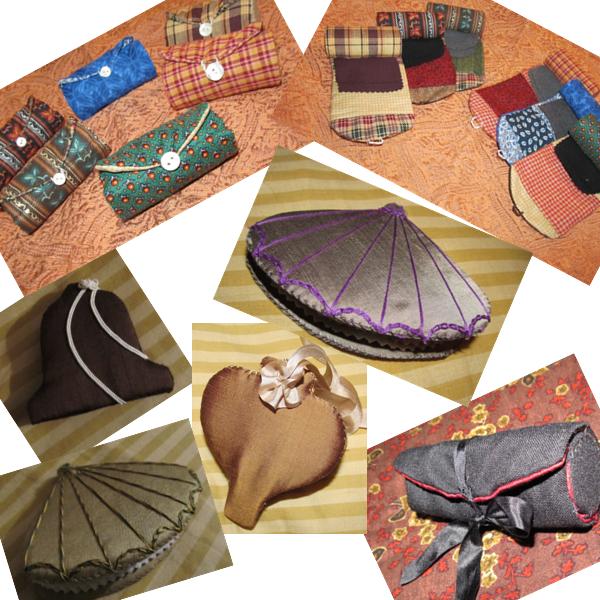
For this trio of swaps we will do three exchanges of calico fabrics with a bonus special swap as the winter gives way to spring. This season’s swaps will include:

1) A Romantic Swap – Swap reproduction cotton prints from the Romantic Era, 1820s through 1840s. This era is full of fun, wild even, colorful prints.
2) A Paisley Swap – Swap early to mid 19th century appropriate cotton prints with a paisley motif. Remember, these motifs tended to be organized whether covering the fabric or part of a stripe motif.
3) A Mini-Print Swap – Swap small scale cotton prints from the early to mid 19th century. These can be tiny florals, geomtrics, stripes, plaids, etc.
Bonus) A Patriotic Swap – For those who want to do a patriotic sewing case for the coming Independence Day or a Memorial project, this swap will exchange 19th century correct prints in red, white and blue as well as reproduced period patriotic prints.

What is a Swap?

This is a chance for to exchange fabric with a small group of people. Each group will have 8 people exchanging pieces of fabric. All you need is a half yard of fabric and envelopes along with your copy of Fanciful Utility.

To Participate:

1: Sign Up Day!
On sign-up day, groups will be assigned on a first-in basis; the first eight will be the first swap group, second eight in the second group, etc. **Please be certain you will be able to fully participate by mailing your fabrics on the Mail-Out Date.**

Romantic Swap Sign-Up Day: January 13th
Paisley Swap Sign-Up Day: February10th
Mini-Print Sign-Up Day: March 10th

Bonus Patriotic Swap Sign-Up Day: April 14th

2: Mail-Out Day:
Place a 9×9″ piece of fabric suited to the mid-19th century in envelopes for each of the 7 other people in your swap group, stamp them (be sure to double check at the post office, but the small 9×9″ pieces should mail in a regular envelope with a normal stamp), and send them off no later than the Mail-Out Day.

Romantic Swap Sign-Up Day: January 31st
Paisley Swap Sign-Up Day: February28th
Mini-Print Sign-Up Day: March 31st

Bonus Patriotic Swap Sign-Up Day: April 30th

3: Get Fanciful!
Use your Fanciful Utility templates and techniques to make a project from the book, or copy your own from 19th century sources. We’ll all look forward to seeing your projects! You don’t have to sew right away, but don’t keep us waiting forever to see all the fun things!

(If you need a copy of Fanciful Utility, you can purchase them from the publisher at www.thesewingacademy.com

Fabric Guidelines:

  1. For the cotton and silk categories, your fabric should be early to mid-nineteenth century appropriate. (If there is a want for an earlier or later group, we can do that.) Prints and motifs should reflect those available in the 1840s, 50s and 60s. Cotton should be 100% cotton. Silk should be 100% silk.
  2. To keep the swap and sewing possibilities interesting, please avoid solids as best we can.
  3. Fabrics that do not work well for sewing cases should not be swapped. These include sheers, gauzes, heavy, thick, easy-to-fray, slippery and stretch fabrics.
  4. For the “crazy swap” category, think crazy quilt in a sewing case. This could include satins, velvets, textured fabrics. Quality synthetic fabrics are invited.

Swapper Guidelines:

  1. Please be certain you can fully participate in the swap before you sign-up.
  2. If something arises after you sign-up that will effect the date you are mailing your fabrics, please email your group so everyone is aware.
  3. If you fail to fully participate in a swap, you will not be able to sign-up for future swaps. (We do understand medical and family emergencies. I need to be able to ensure swappers will receive fabrics when they send fabrics out.)

Q&A

Yes, you can participate in 1, 2 or 3 of the swaps.

Yes, if we end up with multiple groups, you can participate in more than one group to swap more fabric. If you participate in 2 groups, you should swap 2 fabrics.

Yes, you can swap large and small scale prints.

Yes, you can swap now and sew later.

Yes, we would love to see what you’ve made with the swapped fabric.

Yes, you can use your own fabric in your swapped project.

Published in: on January 3, 2014 at 1:01 am  Comments (7)  
Tags:

Welcome 2014!

Happy New Year!!!!

This is the time of year a great many people make New Year’s Resolutions and those of us with historic sewing obsessions put in writing the projects we hope to accomplish in the coming year. While I don’t have the standard list of garments, I have some projects and a small wish list.

In hopes of starting off on the right foot, I have pre-arranged a new Tuesday Millinery Fashion series. I actually have posts for the whole year prepared already. This Tuesday there will be a brief introduction to the series. Then, each week I’ll share some  millinery fashion information from 1864.

I have previously mentioned the Commemorative & Memorial project This year I want to see the research turn into a strong collaborative presentation display filled with recreated examples of what the wives, mothers, daughters and friends  created in memory of those who fought in the Civil War.

In the land of millinery, I plan to get ahead on straw millinery this winter so there will be plenty available when people are looking come spring. I will be making a few fashionable 1864 forms for those who want to be on point fashionably this year as well as favorite late 50s and early 60s shapes. I also have some post-war hat shapes I will do because they are just fun. There will be more doll millinery available as well in both straw, buckram and soft styles.

Fanciful Utility fans have a new round of FanU Fabric Swaps to look forward to. Those will be announced soon. I would like to do at least one social or educational gathering this year such as a book signing or workshop. I still need to work on that.

With Lily’s increasing interest in interpreting history, this year must result in a whole new wardrobe from the skin out. For my sanity, I hope this will include some weekend sewing sessions where she will be learning the skills to make her own clothes as well. This to-do list includes:

2+ drawers
2+ chemises
2-3 petticoats
Corset
remaking her cage
Altering her current dress for summer cooking
New plaid dress *see below
New tbd dress
Coat
 

A fun project for both Lily and I is a set of matching dresses. Well, sort of matching. We have a blue and red plaid semi-sheer. The plan is do up the dresses to show how dresses of the same fabric can be made differently including age differences.

At the top of my short need and want list this year is a new cage. The cages I use are now well over 10 and 15 years old. It is really time for a new one. I also have a particular necklace I want to recreate. I would just buy the original, but it is too small. Beyond that, this will be a year of creating what I am in the mood for.  I do have a stack of fabrics that are waiting to become the assigned garments including several dress lengths, my travel ensemble and a bolt of off cream wool/silk that could become coats for all three of us. I also have a length of carpet that is waiting to become carpet bags.  

I have absolutely no idea what Dan needs for this year.

I have a few non-sewing projects I want to work on. First is the chair I started working on over the summer. This will come back out when the weather turns warm again. Working on the porch just doesn’t work in the cold and snow. I want to try some wood carving for a couple small items.

I am still in search of the right replacement trunk and a commode.

Oh, I almost forgot. We need to at the very least get a large fly that can be set up in multiple ways including a sleeping area. The A frame tent I have just isn’t large enough for two or three of us. (It also needs repairs.)

Published in: on January 1, 2014 at 1:01 am  Leave a Comment