Shawls of the mid-nineteenth century were very large by modern standards, huge in many cases. They were so large that they are often mistaken for blankets or tablecloths when pulled from trunks or at antique shops.
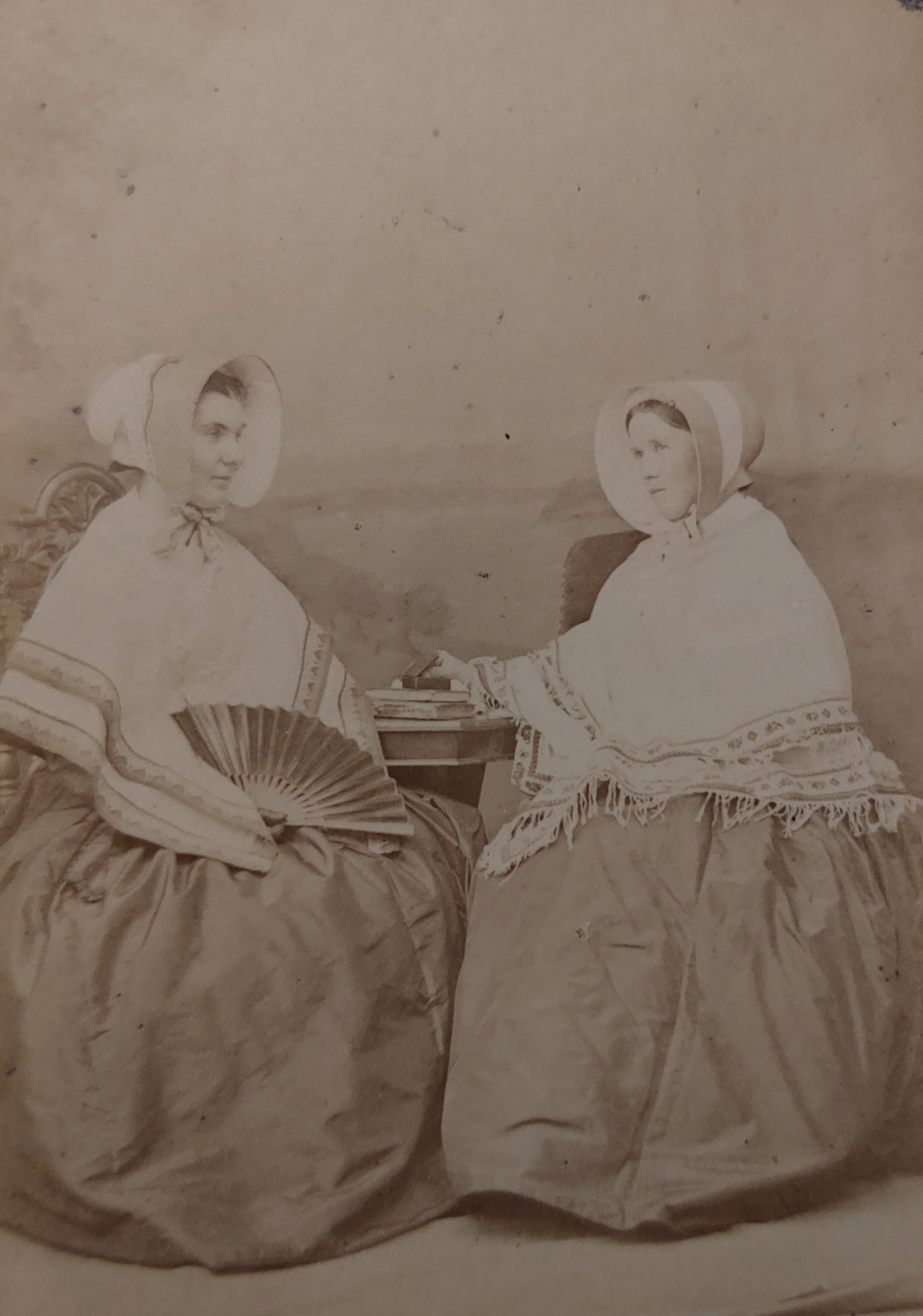
The shift from scarf shawls, those that were long and narrow, of the Regency era to square shawls was firmly in place by 1830 and 1840s. The image to the right is ca 1840s. Notice the size of these shawls.
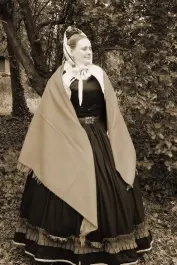
In the 1850s shawls began to increase in size dramatically. When folded in half diagonally, creating a triangle, these shawls descended nearly to the ground from the shoulder. Rectangular shawls, known as long shawls, double squares, or plaids, became popular. These were folded in half to create a square, then in half again to be worn as a triangle.


- Square shawls should be in the range of 55 inches to 70 inches square with 64 inches square being standard.
- Long shawls are double squares, sometimes called plaids, which should be 55 inches wide by 110 inches long to 70 inches wide by 140 inches long with 64 inches wide by 128 inches long being the most common.
- Three-quarter shawls are 3/4ths the width and 3/4ths length of a standard double square shawl. A three-quarter shawl would be 48 inches wide by 96 inches long.
- Handkerchief Shawls are notable smaller in size. Shawls this size were listed and taxed differently in tarriff schedules. It was common to add borders to a handkerchief shawls.
- Scarves are much longer than they are wide. A shawl 3 feet by 9 feet would be considered a scarf. These were more popular earlier in the 19th century.
Exceptions to these standard sizes can be seen for lace, knit, and crochet shawls which tended to be triangular.
Next, consider weight. One of the mistakes I observe is the use of wool which is more of a blanket weight than a shawl weight. The weight of fabric is determined in ounces per linear yard. If you want to think of wool weights in terms of modern suit weights, a tropical weight is the lightest and regular is generally the fabric worn for a winter suit.
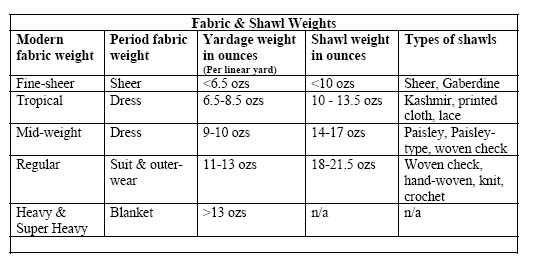
For more in-depth information, read Paisley, Plaid, & Purled: Shawls of the Mid-Nineteenth Century






 If I Had My Own Blue Box:
Fascinating–I inherited a plaid shawl and at first I thought it was a lightweight blanket or some kind of throw. It’s lovely and warm, but a bit fragile from all the years it’s been alive.