Now that I’ve talked about Fashion Straw Hats, there will of course be people saying “but what about this one”. One word:
Context.
Yes, there were other shape hats…. They all have their place. It is very important to understand the context of these other shapes before you wear one.
 Hat shapes are time sensitive, such as the promenade hats to the left from June of 1850, age sensitive, such as hats for youth, year sensitive, such as hats from late in the war, and situation sensitive.
Garden Hats:

longislandmuseum.pastperfect-online.com
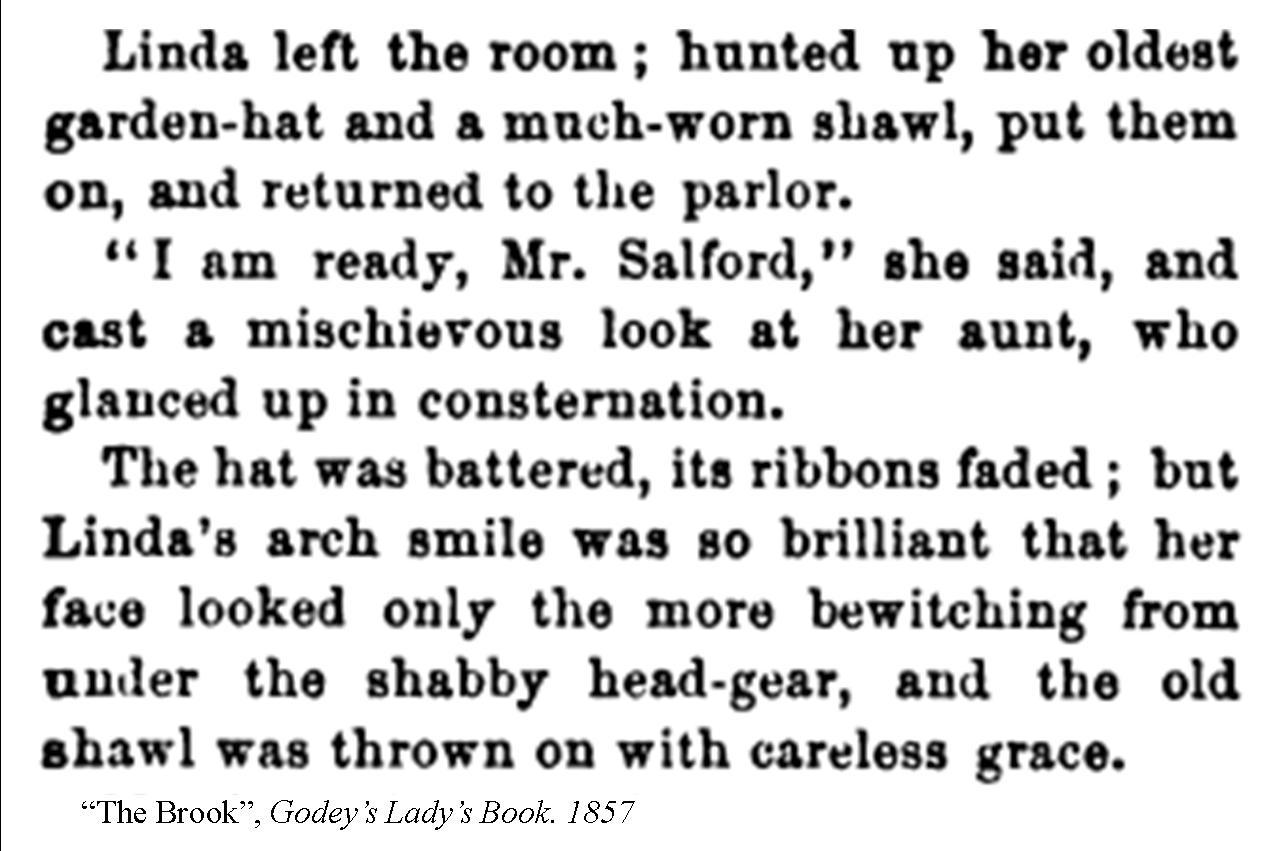
William Sidney Mount’s Returning from the Orchard shows a good example of a garden hat. She wears a hat with a shallow crown and a round, full brim.

Lily Martin Spencer gives us a very nice look at a garden hat in her painting The Artist and Her Family at a Fourth of July Picnic, ca1864. On the right, you can see the hat held just behind the woman in pink. It is an almost circular hat, though still an oval crown, with a wide brim.
To give us even more perspective on the garden hat, take a look at this story snip-it:
Seaside and Resorts:
One of the first things you will notice when looking at seaside/resort images is that the range of millinery is in addition to rather than instead of. We see round, wide brim hats in addition to fashionable hats, in addition to bonnets. This 1859, Harper’s Weekly image demonstrates this.
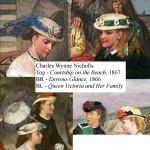 Notice – Charles Wynne Nicolls paints several of his seaside women with hats that don’t fit the norm we see seaside. This is important to note because these pieces were painted on the other side of the pond in England. These were also painted late or just after our Civil War eras. A further detail of how important context is.
Reform Dress Hats:
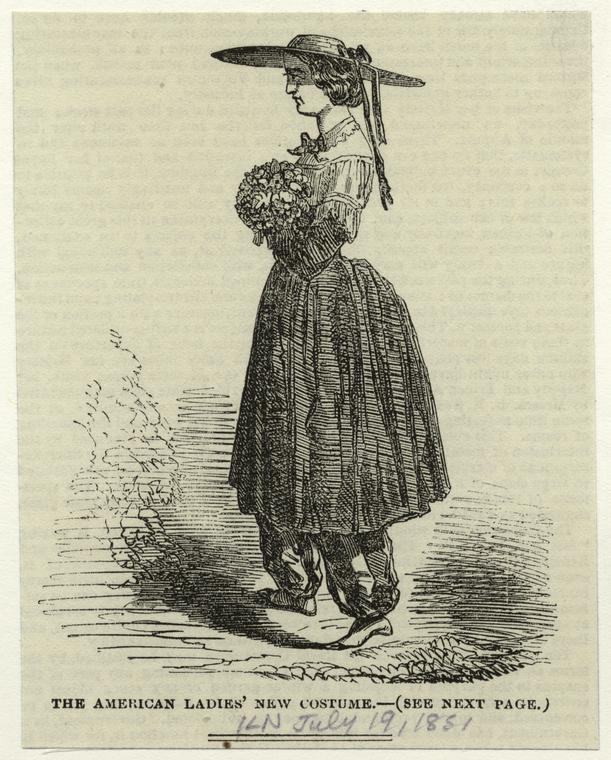
The American ladies’ new costume. (1851)
Many 1840s – 1860s illustrations of reform dress show a wide brim, shallow crown hat as part of the attire. This shape of hat was seen a practical, shading the face and eyes from the sun.






 If I Had My Own Blue Box:


Thank you for your information regarding seaside hats. Victoria